 Citadella Gift Shop
 Liberty Gift Shop
 Citadella Café
 Chimney Cake
 Liberty Café
 EN
EN 
When a tourist spends 3–4 days in Budapest, planning the itinerary is often dense and tightly packed. The question may arise: why is the Citadella a must, when the city is full of museums and historic baths? The answer lies in orientation and in historical density.

The Perfect Spatial Orientation
To understand a new city, you need to see its structure. The 235-metre-high Gellért Hill and the Citadella standing on it are not just a lookout, but the floor plan of Budapest brought to life. From here, a single glance takes in the bend of the Danube, the rhythm of the bridges, the contrast between the Pest plain and the Buda hills. This is the point (part of the UNESCO World Heritage) where the tourist can physically place themselves within the city, which dramatically eases navigation for the next 3 days.
Two Hundred Years of History in a Single Location (The Timeline Overview)
While other monuments each present one specific era, the Citadella is a complex historical cross-section. A single walk lets you trace the Habsburg oppression (the fortress's original function), the destruction of World War II (an anti-aircraft base), the era of the Soviet dictatorship (the original context of the Liberation Monument), and the democratic turn of the regime change. This density is invaluable on a short, 3–4 day trip, where time is scarce.
The New Urban Experience (The Citadella Experience)
The renovated Citadella is no longer a passive heap of stone. The opened walls, the newly created public park, the cafés and the interactive exhibition offer a multi-hour, quality programme that is not merely a sight to tick off, but a real recreational space. At the end of a long day of sightseeing, watching from here at sunset as the lights of the capital come on is not just a photo opportunity, but the essential Budapest experience itself.
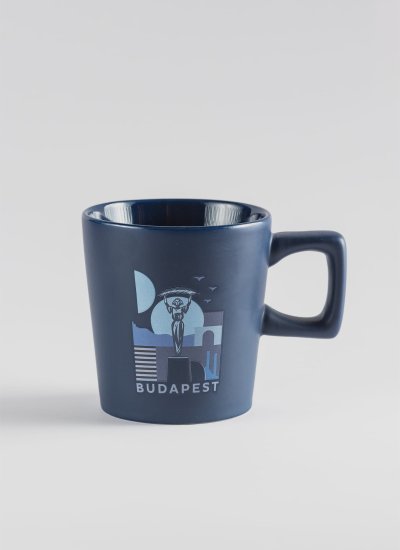
This extraordinary historical journey and its present-day renewal are also celebrated by the in-house-designed Citadella collection, which visitors can discover in the on-site gift shops. As the close of a walk on Gellért Hill, it is worth exploring the range and taking home a tangible memento of the capital's reborn symbol.