 Citadella Büfé
 Citadella Gift Shop
 Liberty Gift Shop
 Citadella Café
 Chimney Cake
 Liberty Café
The Mohács Busó Festival is one of Hungary’s most spectacular traditions and is inscribed on UNESCO’s Representative List of the Intangible Cultural Heritage of Humanity. Even today, the sight of busós wearing willow-wood masks painted with blood-red details, dressed in inside-out sheepskins, and shaking loud wooden rattles has a powerful, unforgettable impact.

According to the most popular local legend, which originated in the 18th century, the busós were descendants of Hungarians and the Šokci (a South Slavic ethnic group) who had taken refuge in the marshes of Mohács Island. They are said to have donned frightening masks and, under the cover of darkness, crossed the Danube to drive the Ottoman Turks out of the town. While this is a heroic story, historical evidence tells a different tale. During the Ottoman occupation, the population of Mohács changed significantly, and the settlement of the Šokci took place only after the Ottomans had already been expelled.
From an ethnographic perspective, the Busó Festival is a pagan ritual celebrating the end of winter, welcoming spring, and invoking fertility. The tremendous noise made by rattles and cannon fire, the ceremonial fire used to burn the symbolic coffin of winter, and the terrifying masks all served to drive away evil spirits and the cold. These customs were brought from the Balkans by the settling Šokci people and gradually evolved in Hungary into the unique tradition we know today.
Today, the Busó Festival is far more than a local ritual. It has become one of Hungary’s most popular cultural events, attracting tens of thousands of Hungarian and international visitors every year during the final days of the Carnival season.
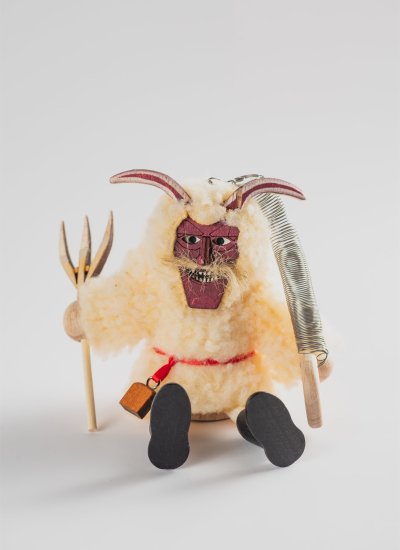
Although traditional busó masks are intentionally frightening, we chose to reinterpret this vibrant, life-affirming folk tradition in a much friendlier and more lovable way. The central figure of our collection is a smiling, welcoming busó, wearing every authentic element of the traditional costume: the distinctive ram’s horns, the warm sheepskin coat, and the bell symbolizing fire.