 Citadella Büfé
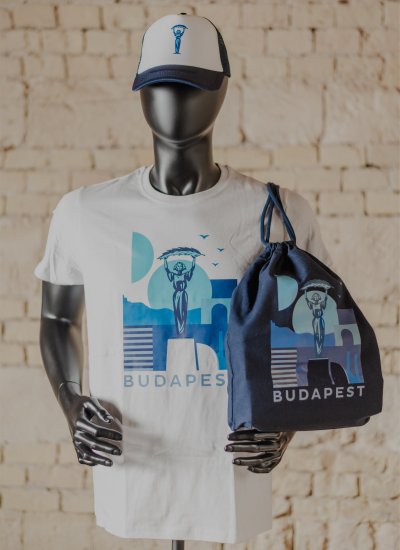
 Citadella Gift Shop
 Liberty Gift Shop
 Citadella Café
 Chimney Cake
 Liberty Café

Looking northeast from the Citadella, the eye travels as far as the trees of City Park, where the monumental silhouettes of Vajdahunyad Castle and Heroes’ Square emerge in the distance. In 1896, Hungary celebrated the thousandth anniversary of the Magyar conquest of the Carpathian Basin. The jubilee unleashed an extraordinary creative energy that fundamentally reshaped the cultural map of Pest. The millennium was more than a look back at history: it was a spectacular assertion of identity by a confident country at the height of its powers.

Built in City Park, the National Millennium Exhibition dazzled millions of visitors with the splendour of a true world’s fair. Hundreds of pavilions showcased the finest achievements of Hungarian industry, science, agriculture and art. It was then that the Historical Building Complex — today’s Vajdahunyad Castle — took shape from Ignác Alpár’s brilliant designs, blending the most beautiful features of Hungarian Romanesque, Gothic, Renaissance and Baroque architecture into a single harmonious fairy-tale world. Construction of the Kunsthalle and the Museum of Fine Arts also began during this period, alongside the planning of the grand sculptural ensemble of Heroes’ Square. Together, they established the park as a lasting centre of culture and national remembrance.
Yet the exhibition grounds offered far more than scientific and industrial progress: they also ushered in a revolution in carefree urban entertainment. On the edge of the park, the legendary Ős-Budavára entertainment quarter opened, recreating the streets, bazaars and minarets of Ottoman-era Buda as a vast theatrical townscape. A whirl of cafés, restaurants with live music, variety shows and exotic attractions welcomed citizens strolling late into the evening, while illuminated boats and Venetian gondolas rocked on the lake. This was when Pest truly learned the rituals of modern nightlife and uninhibited enjoyment.
This euphoric bustle also drove the rapid modernisation of the capital’s infrastructure: the crowds flocking to the Millennium Exhibition had to travel smoothly from the city centre to the park. Continental Europe’s first underground railway was built beneath Andrássy Avenue in record time. Above ground, tram lines spread across the city, the Franz Joseph Bridge — today’s Liberty Bridge — opened, and the grand apartment buildings lining the Grand Boulevard took on their final form. Preparations for the millennium thus became far more than an isolated series of festivities beneath the park’s trees. They were the powerful catalyst that, within just a few years, brought Budapest together as a functioning, vibrant metropolis.
The legacy of millennium fever remains alive in the city’s everyday life. Looking back on that era from the Citadella, it is clear that late nineteenth-century Budapest was unafraid to dream big, and that this optimism shaped the city we love today. Most of the exhibition’s pavilions have disappeared, but the spirit of City Park, the dignity of its cultural institutions and the unwavering faith of the city’s builders still pulse above the green canopy. Seen from on high, the historical arc that brought the Hungarian capital to the forefront of European culture comes clearly into view.